Manufactured at Pipalkhiriya, Raisen (M.P.) A brand of Suvega Innovations

CPVC Plumbing Systems

CANTER CPVC pipes & fittings - 15 to 200 mm

Hot and cold water plumbing that resists corrosion and scale, from home bathrooms to industrial process lines - manufactured in Raisen, Madhya Pradesh.

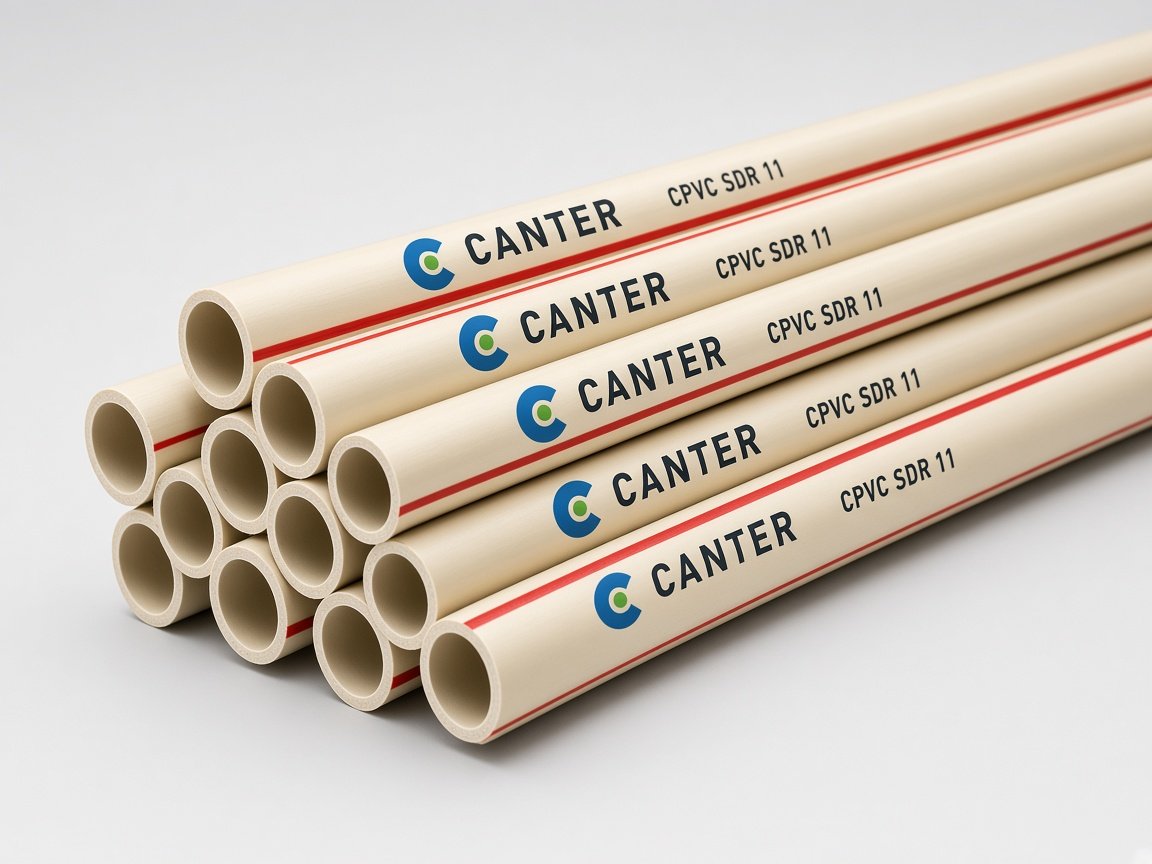
Tan CANTER CPVC SDR 11 pipes with red class stripe

Hot & cold water

One pipe for the whole water system

CPVC (chlorinated polyvinyl chloride) is a rigid thermoplastic made for water systems that carry both hot and cold water. It does not rust, pit or scale, and its smooth bore keeps flow steady for the life of the building. CANTER CPVC pipes and matching fittings are made by Suvega Innovations at our plant in Pipalkhiriya, Raisen, close to Bhopal.

  • Tan market-standard colour
  • 15-200 mm range
  • 93°C material rating
See sizes & pressure classes

Sizes & pressure classes

From ½″ plumbing to 8″ industrial lines

CPVC is made in two size ranges. Small-bore plumbing pipe, 15 to 50 mm (½″ to 2″) in SDR 11 and SDR 13.5, is what plumbers use inside buildings; large-bore industrial pipe, 65 to 200 mm (2½″ to 8″) in Schedule 40 and Schedule 80, is used for risers, mains and process lines.

15-50 mm

Small-bore plumbing pipe

Small-bore pipe in two wall classes, for hot and cold water inside homes, hotels and hospitals. Fittings are made to the SDR 11 dimensions.

  • ½″, ¾″, 1″, 1¼″, 1½″ and 2″
  • SDR 11 (Class 1) and SDR 13.5 (Class 2)
  • Solvent-cement and brass-threaded joints
65-200 mm

Large-bore industrial pipe

Schedule 40 and Schedule 80 pipe for larger distribution lines, risers, plant rooms and process piping.

  • 2½″, 3″, 4″, 5″, 6″ and 8″
  • Schedule 40 and Schedule 80 walls
  • Solvent-cement and flanged connections

Small-bore pipe: pressure classes

CPVC small-bore pipe classes and pressure ratings
ClassSDRSizesPressure at 23°CPressure at 82°CPipe marking
Class 1SDR 1115 - 50 mm28.1 kg/cm²7.0 kg/cm²Tan + red stripe
Class 2SDR 13.515 - 50 mm22.5 kg/cm²5.6 kg/cm²Tan + brown stripe

Outside diameters, 15-50 mm

CPVC small-bore nominal sizes and outside diameters
Nominal sizeInchOutside dia. (mm)
15 mm½″15.9
20 mm¾″22.2
25 mm1″28.6
32 mm1¼″34.9
40 mm1½″41.3
50 mm2″54.1

Large-bore pipe up to 200 mm

CPVC large-bore sizes with outside diameter and wall thickness for Schedule 40 and 80
SizeOutside dia.Sch 40 wallSch 80 wall
65 mm (2½″)73.05.167.01
80 mm (3″)88.95.497.62
100 mm (4″)114.36.028.56
125 mm (5″)141.36.559.53
150 mm (6″)168.37.1110.97
200 mm (8″)219.18.1812.70

All dimensions in mm. Reference dimensions; pressure ratings are for SDR 11 / 13.5 pipe and fall as temperature rises. Ask us for the sizes and classes currently in stock.

Colour & marking

Tan pipe, class-coded stripes

Tan (cream) is the colour plumbers and site engineers across India recognise as CPVC, and it sets CPVC apart at a glance from grey UPVC pressure pipe and dark-grey SWR drainage pipe. CANTER CPVC follows the same convention: tan pipes and fittings, with a stripe and printed marking that tell you the class.

CANTER CPVC colour coding
ProductColour
SDR 11 pipe (Class 1)Tan with red stripe
SDR 13.5 pipe (Class 2)Tan with brown stripe
Schedule 40 pipeTan with brown stripe
Schedule 80 pipeTan with red stripe
FittingsTan
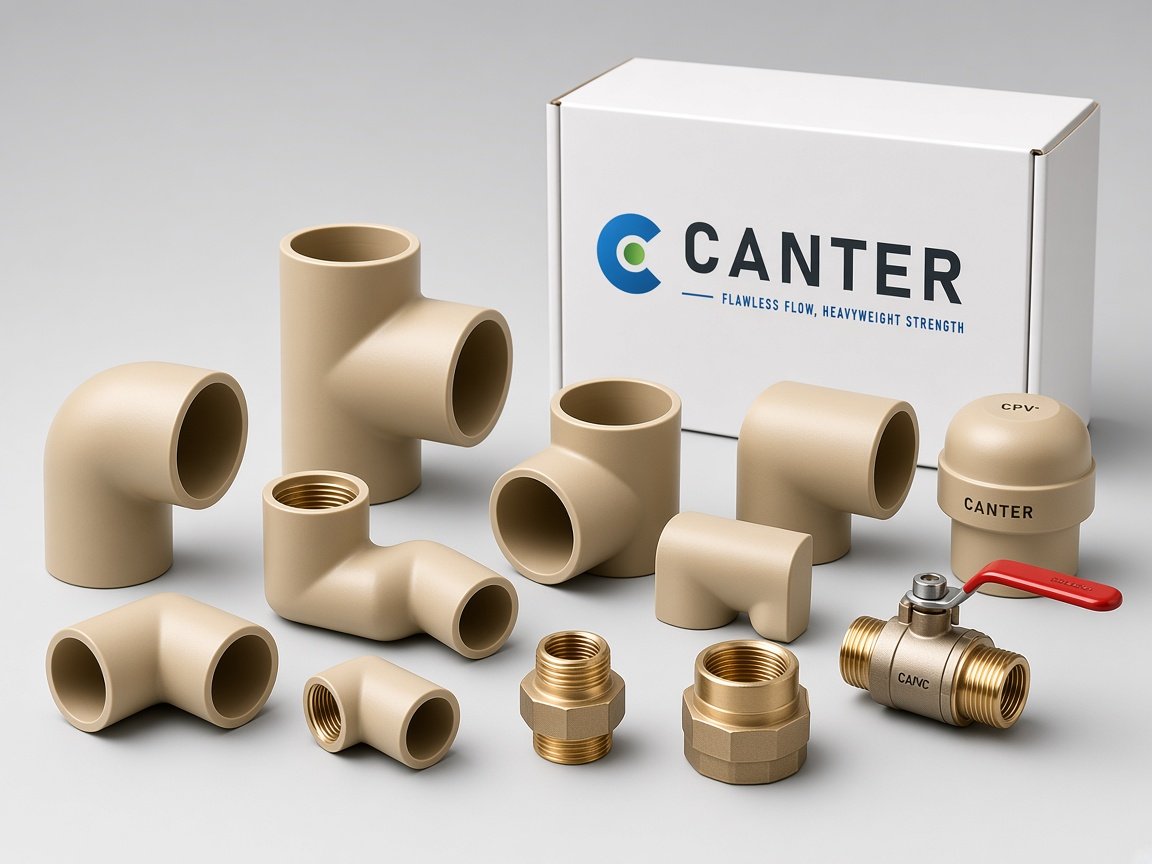
Tan CANTER CPVC fittings: elbows, tees, couplers, end cap, brass adaptors and ball valve

Fittings & valves

Every joint, bend and branch

Fittings are made to match the pipe, so sockets seat fully and joints stay leak-free.

Elbows & bends

90° and 45° elbows for changes of direction.

Tees & couplers

Equal tees, straight couplers and reducer couplers to branch and extend runs.

Unions & end caps

Unions for easy removal and servicing; end caps to terminate and test lines.

Brass-threaded adaptors

Male and female brass-insert adaptors for taps, mixers, geysers and metal pipe.

Ball valves

Shut-off valves for isolating branches, floors and fixtures.

Reducers & bushes

Step down between sizes without changing the pipe run.

Flanges

Flanged connections for larger lines and equipment.

Solvent cement

Use cement made for CPVC to weld joints into one piece.

Get the current fittings list & prices

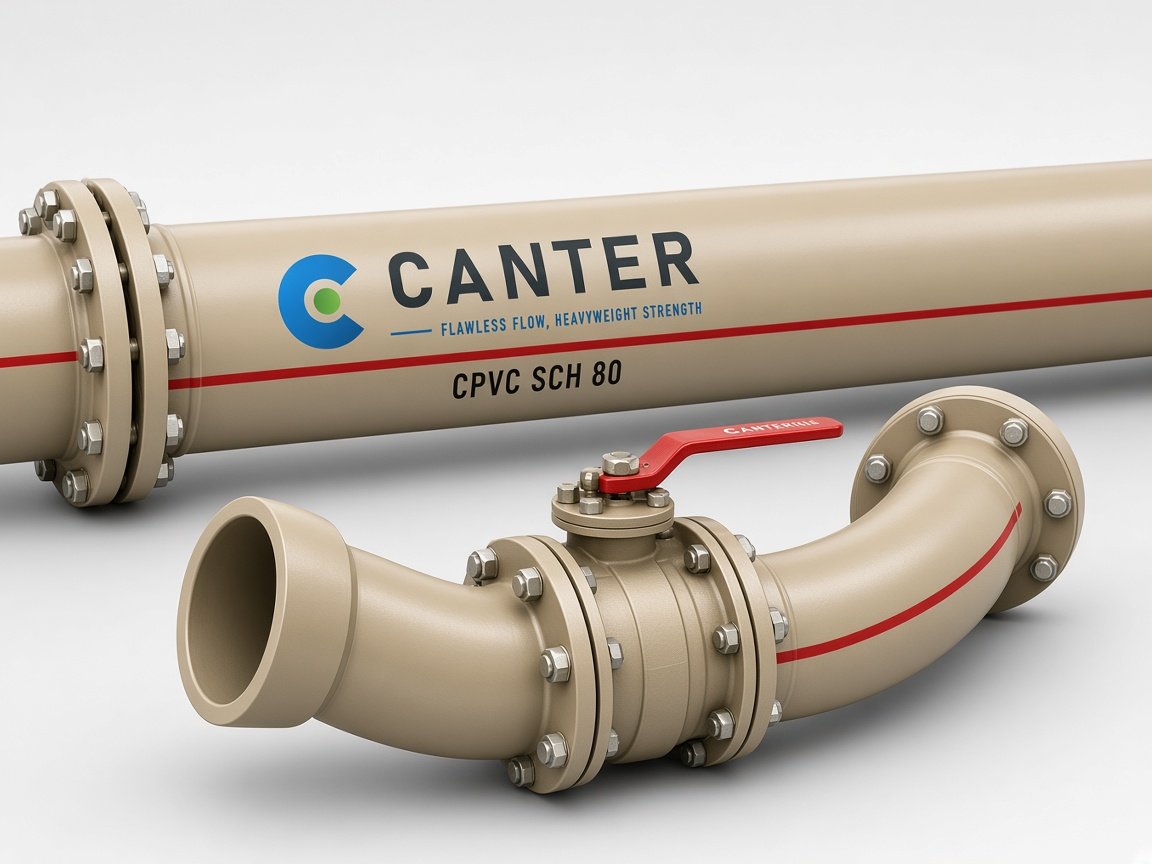
Large-diameter tan CANTER CPVC Schedule 80 pipe with flanged joint, elbow and ball valve

Large bore & industrial

CPVC for process lines and risers

Beyond plumbing, CPVC handles hot water, many chemicals and corrosive fluids that would eat through metal pipe. Heavier Schedule 40 and Schedule 80 pipe up to 200 mm is used where lines are bigger and pressures higher.

  • Hot-water risers and mains in hotels, hospitals and hostels
  • Plant-room and boiler-feed lines at moderate temperatures
  • Chemical, pharma and food-processing lines (confirm chemical compatibility with us)
  • Swimming-pool, spa and water-treatment piping
Discuss an industrial requirement

CPVC vs the alternatives

Why CPVC for hot and cold water

CPVC compared with UPVC and metal pipes
CPVCUPVCGI / metal pipe
Hot waterYesNot recommendedYes
Rust & scalingNoneNoneRusts and scales over time
WeightLightLightHeavy
JointingSolvent cement - no threading or weldingSolvent cementThreading or welding
Heat loss in hot linesLow - poor conductor of heatn/aHigher - needs more insulation
Colour in the marketTan / creamLight greySilver / galvanised

Why choose CANTER CPVC

  • Virgin resin, no scrap - made from high-quality virgin resin compound; no scrap, regrind or recycled material is used.
  • Hot and cold water in one system - one material for geysers, bathrooms and kitchens as well as cold supply.
  • Corrosion and scale resistant - no rusting, pitting or scale build-up inside the pipe, so flow stays smooth.
  • Leak-proof solvent-cement joints - joints become part of the pipe when assembled correctly.
  • Full size range - from ½″ plumbing to 200 mm industrial lines, so one supplier covers the whole building.
  • Matched pipes and fittings - sockets and pipe ends are made to fit each other.
  • Lightweight and quick to install - easy to cut and handle on site, with less labour than metal piping.

Where CPVC pipes are used

  • Hot and cold water plumbing in apartments, villas and independent homes
  • Hotels, hospitals, hostels, malls and other commercial buildings
  • High-rise risers and plant rooms (choose the right class for the pressure)
  • Industrial process and chemical-handling lines
  • Solar water-heater and geyser connections

Installation tips

  1. Cut the pipe square and remove burrs and shavings from both the pipe end and the fitting.
  2. Dry-fit to check the depth of engagement, and mark it on the pipe.
  3. Apply solvent cement suitable for CPVC evenly to the pipe end and the fitting socket.
  4. Push the pipe fully home with a quarter-turn and hold for a few seconds.
  5. Allow the joint to cure for the time given by the cement manufacturer before pressure testing.
  6. Allow for thermal expansion on long hot-water runs with offsets or loops, and support the pipe at regular intervals.

Always follow the solvent-cement manufacturer's instructions and local plumbing codes. Our team is happy to help with project-specific questions.

FAQ

CPVC pipes - common questions

What is the difference between CPVC and UPVC pipes?

Both are rigid, corrosion-free and joined with solvent cement. The main difference is temperature: CPVC is made for hot and cold water plumbing, while UPVC is intended for cold water, agriculture and general pressure lines. In the market CPVC is tan or cream and UPVC pressure pipe is light grey.

What sizes of CPVC pipe do you make?

Small-bore plumbing pipe from 15 mm to 50 mm (½″ to 2″) in SDR 11 and SDR 13.5, and larger industrial pipe up to 200 mm (8″) in Schedule 40 and Schedule 80. Tell us the sizes you need and we will confirm what is in stock.

What temperature can CPVC pipes take?

CPVC compound is rated for service up to about 93°C. The pressure a pipe can carry falls as temperature rises - SDR 11 pipe is rated 28.1 kg/cm² at 23°C and 7.0 kg/cm² at 82°C - so choose the class for your operating pressure and temperature.

Why are CPVC pipes tan or cream coloured?

Tan or cream is the standard colour for CPVC in India, which makes it easy to tell apart from grey UPVC pressure pipes and dark-grey SWR drainage pipes on site. A coloured stripe on the pipe shows its class.

Can CPVC pipes be used in high-rise buildings?

Yes, with the right class. Choose SDR 11 or a heavier schedule for higher pressures and follow good practice on supports and thermal expansion. Our team can help you select the class for your building height.

How are CPVC pipes and fittings joined?

With solvent cement made for CPVC, which chemically welds the pipe and fitting together. Brass-threaded adaptors are used where the plastic line connects to taps, valves and metal pipework, and flanges are used on larger lines.

Do you supply CPVC pipes to dealers and contractors?

Yes. We supply dealers, distributors and contractors directly. Send an enquiry with your location and quantity and our sales team will respond with terms.


Planning a project or want to stock CANTER?

Tell us what you need - pipe sizes, quantities, delivery location. Our team will get back to you with a quote.